
Sustainability
Jacobi Carbon’s Go Green Initiative is a well-established sustainability programme designed to help the company become the industry’s most sustainable manufacturer and supplier.
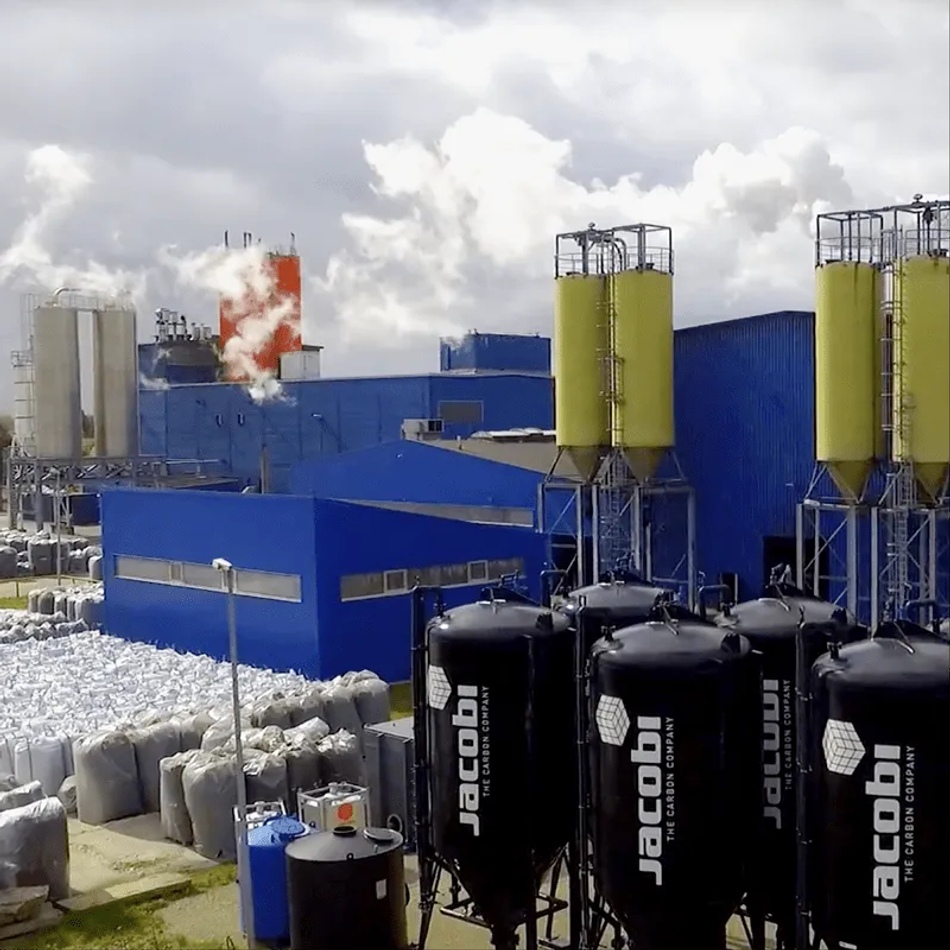
The program has four fundamental areas.
- Product Innovation
- Clean Tech Carbonisation
- Production Improvement
- Reactivation
Each area has measurable performance indicators.
Product Innovation
Jacobi is the world’s largest manufacturer and supplier of coconut shell-based activated carbon, which accounts for most of its sales. The company also offers coal-based activated carbons, as these provide pore structures and performance characteristics that cannot always be replicated with pure coconut shell materials.
However, Jacobi is investing heavily in product development and R&D to phase out coal-based products over time. Commercialised innovations under this programme include the CE and OX series of pelletised coconut shell carbons, as well as hybrid products. Additional products made from novel raw materials are also in development.
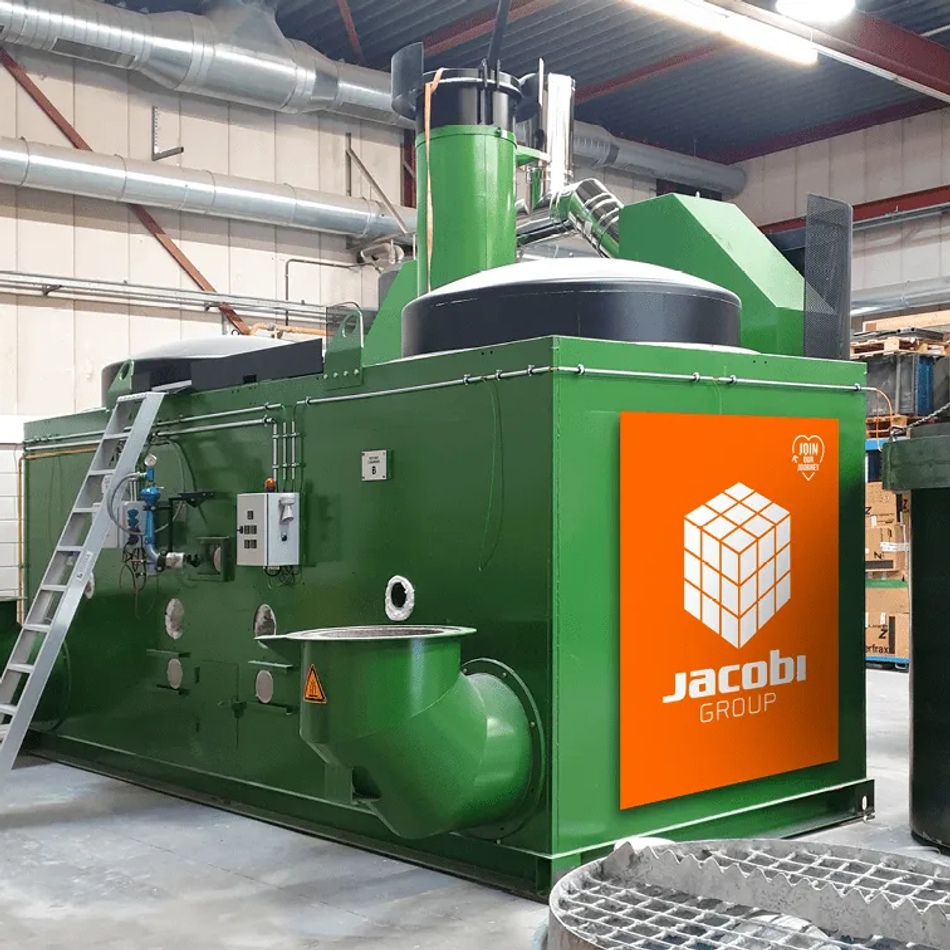
Key suppliers are supported through the introduction of two new carbonisation process technologies. A semi- continuous process based on the GreenEco furnace and a continuous Rotary kiln technology combine with electricity generation based on utilisation of process heat to reduce markedly Global Warming Potential compared with traditional processes. Charcoal yield and quality is improved while reducing emissions.
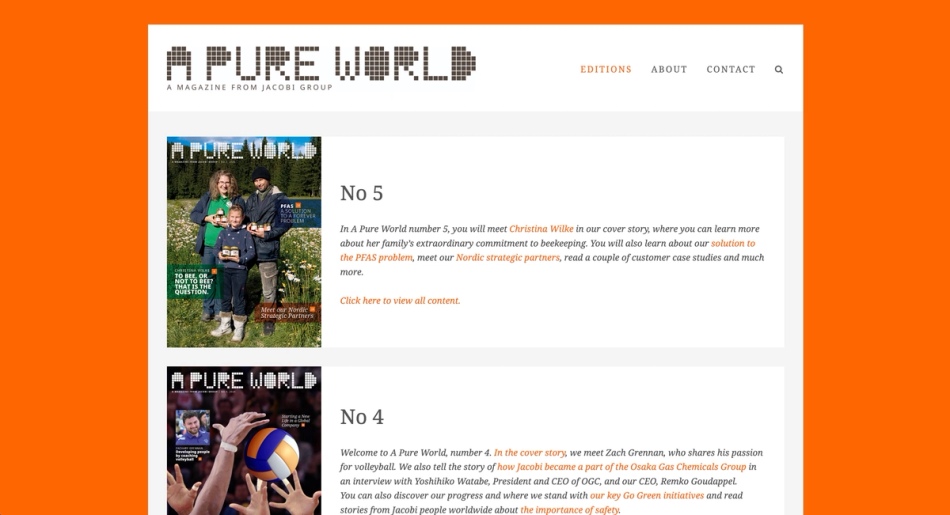
Jacobi Pureworld magazine
Visit apureworld.com ↗A Pure World is a corporate magazine created by the Jacobi Group. The purpose of the publication is to arouse pride and curiosity, both internally and externally. Articles and features can be both light-hearted or more serious - featuring content that reflects the global company that Jacobi is today.
Continuous Production Improvement
Operating waste heat recovery systems to product steam and electricity , Jacobi’s’ coconut carbon manufacturing already has a low GWP. In addition , Jacobi is expanding use of solar power, rain water harvesting and effluent water recycling with the aim of reaching a net zero GWP in the coming years. Jacobi processes are continually examined to determine ways to improve environmental impact and lessen GWP.
Reactivation
Reactivation capacity is currently being expanded in Europe and in North America. This will allow an increased quantity of spent carbon to be returned to Jacobi for reprocessing and reuse by customers. The reactivation process provides the opportunity to improve the spent carbon performance attributes including blending in carbon from renewable products.