
Molecular Sieve
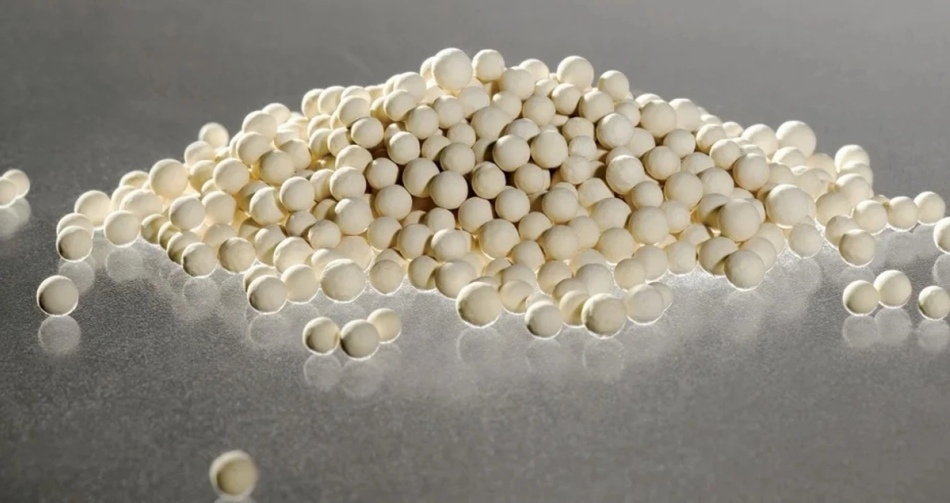
High performance products, comprehensive technical support. R&D for real-world applications from Zeochem.
Zeochem’s beginnings date to 1818 with the manufacturing of chemicals in Uetikon, Switzerland. Molecular sieve manufacture began in 1973 and in 1979 molecular sieve production expanded to Louisville , Kentucky, USA. Today Zeochem has manufacturing sites in Switzerland, USA, India, China, and Bosnia. Zeochem maintain their traditional high standard of manufacturing, innovative products and customer focused research and development.
Zeochem Molecular Sieve Applications
Natural Gas Processing and Liquified Natural Gas
- Dehydration of natural gas and natural gas liquids
Zeochem offers a range of long-lasting molecular sieve products for removal of water from natural gas and liquid hydrocarbon streams. These products are used to meet dew point specifications for pipeline, NGL, fractionation liquid (LPG, condensate, propane and butane) and LNG specifications. Zeochem products are effectively used in plants worldwide to consistently remove water to less than 0.1 ppmv levels with predictable and reliable performance.
Zeochem’s Z4-04 molecular sieve is a standard grade of the 4A type zeolite that can be used for dehydration of hydrocarbon gas and liquid streams utilising its high equilibrium capacity, strong dynamic characteristics and physical properties. If H2S and CO2 are present in the stream, the formation of COS can occur. To avoid COS formation, Zeochem offers alternative products that will minimize this occurrence. Zeochem Z4-04 is normally regenerated at a temperature of ~288°C with a typical range of 260–315°C.
Zeochem’s Z3-06 molecular sieve is a form of the 3A type crystal that has unique properties and value for dehydration of hydrocarbon gas and liquid streams in specific applications and units. This and other products in Zeochem’s 3A family have the advantage of excluding other molecules from the internal crystal lattice while still adsorbing water. By limiting penetration and co-adsorption of molecules such as hydrocarbons, carbon dioxide and sulphur contaminants, the product and regeneration streams have a more consistent and predictable composition. This minimizes spiking of contaminants in these streams, which could potentially cause off-specification product or an inability to dispose of the spent regeneration gas. In addition to limiting hydrocarbon penetration and co-adsorption, Zeochem’s 3A molecular sieves allow lower regeneration temperatures, normally heating at a temperature of ~232°C, with a typical range of 204–260°C.
Zeochem Z3-26 molecular sieve is a specially developed product with increased capacity which offers longer life and greater throughput. This increased capacity means that the size of new vessels can be reduced. This high-performance product is suitable for dehydration of hydrocarbon gas and liquid streams in specific types of units. As a member of Zeochem’s family of 3A products, Z3-26 has the advantage of excluding other molecules from the internal crystal lattice while still adsorbing water. In reactive streams, use of Z3-26 can minimize COS formation in the presence of H2S and CO2 and reduce coking, thus maximizing service life.
Zeochem Z4-24 molecular sieve was developed for use in streams that contain elevated levels of heavy hydrocarbons. Its unique formulation offers increased capacity and longer bed life when compared to standard 4A products. This high-performance product is particularly suitable for use in natural gas dehydration plants, LNG and NGL plants. This product is also used for removal of small oxygenates, such as methanol, from hydrocarbon streams. Our Z4-24 has an open pore structure, giving it excellent equilibrium and dynamic performance, along with optimum physical strength and high hydrothermal stability. For cases where coadsorption of sulfur compounds and CO2 in the feed is not a concern, Z4-24 is an ideal choice.
- Removal of Sulphur impurities from natural gas or natural gas liquids
Zeochem’s family of 5A type molecular sieve zeolites can remove sulfur species that are approximately 5 angstroms or less in kinetic diameter. These products have excellent physical and kinetic properties, along with hydrothermal stability when adsorbing water and sulfur compounds in regenerative applications. They are recommended when removal is limited to hydrogen sulfide, methyl mercaptan and ethyl mercaptan. Zeochem’s product line includes a product specially developed for the minimization of carbonyl sulfide (COS) formation when hydrogen sulfide and carbon dioxide are present.
Zeochem’s family of 13X type molecular sieve zeolites can remove sulfur species that are approximately 10 angstroms or less in kinetic diameter. These products have the highest adsorption capacity and fastest kinetics for the removal of impurities and are often recommended when further optimization is needed. With their large crystal pore openings and open pore structure, they are ideally suited for removal of the larger sulfur species, such as propyl and butyl mercaptans, from natural gas and hydrocarbon liquids. By contrast, other molecular sieves cannot adsorb them due to their smaller size.
Hydrogen Production
- Hydrogen gas is produced from a variety of processes including methane steam reforming, refining offgas from hydrocracking and desulphurisation, and electrolysis plants. Zeochem has products for each of these processes including Z3-06 for dehydration of electrolysis gas in thermally regenerated units, Z5-05 for purification of methane steam reformer product gas in polybed PSA systems, and Z4-04 for dehydration of refinery offgas.
Ammonia and Synthesis Gas
- Drying and purification of the reformer gas prior to the ammonia loop utilises Zeochem Z10 (13x) series molecular sieves to remove water, CO and CO2 and other contaminants to protect the ammonia synthesis catalyst.
Industrial Oxygen
- Cryogenic air separation unit ASU
Bulk pure oxygen production by ASU’s requires pretreated air. These front end treaters utilise Zeochems 13x series molecular sieve to remove CO2, NO and other trace contaminants in a thermally regenerated adsorption unit prior to the coldbox where fractionation of the major gases occurs.
Zeochems 13x Z10-02 series sieves offer performance options from standard to high performance debottlenecking and low energy consumption. We can assist with technical design evaluations.
- Pressure swing adsorption PSA
Smaller tonnage production units requiring O2 purity up to 95% utilise the relative N2 and O2 affinity on molecular sieve at different pressures to achieve separation.
The 13x Z10-04 series offer a range of N2/O2 selectivities, N2 capacity, and higher O2 purity as required.
- Vacuum pressure swing adsorption VPSA
For mid volume production and higher O2 purity VPSA takes advantage of the same technology as PSA; however, VPSA uses vacuum pressure, or the difference between atmospheric pressure and absolute pressure generated by a vacuum blower. The vacuum swing allows for maximization of the adsorption and desorption by taking advantage of the full isotherm curve for specialty lithium molecular sieves.
Zeochem produces an extensive range of specialty 13x Lithium, Li-LSX sieves for VPSA processes.
Medical Oxygen
As the global population’s respiratory ailments are diagnosed and treated, the need for oxygen-enriched air is on the rise. Many companies are designing and manufacturing medical oxygen concentrators using Zeochem’s high-performance ZEOX molecular sieve products,
Concentrators provide patients with lightweight, portable, personal oxygen supplies up to 95% purity using a miniature PSA process. These devices require molecular sieve with the highest N2 affinity & capacity and fast kinetics – ZEOX 13x Li-LSX Lithium series molecular sieves lead the market.
Refining
Refineries use molecular sieve units to treat various gas and liquid hydrocarbon streams requiring purification to meet product specifications, prevent equipment corrosion and damage, protect catalyst units and prevent freezing in the plant
- Dehydration of Hydrogen streams using Z4-04 (4A).
- Dehydration of light-ends (e.g. olefin) with Z3-02 (3A) for cryogenic recovery
- Purification of feed to catalytic processes such as removal of water , Sulphur, and oxygenates with Z4-01, Z5-03HP and Z10-03 (13x) prior to isomerization and HF alkylation units.
Ethanol dehydration
The majority of ethanol used in fuel is blended with gasoline. For the blend to be stable, water must be removed, yet because ethanol and water form an azeotrope, not enough water can be removed from the ethanol solution using simple distillation. When ethanol purity above 95% is required, molecular sieves are the best technical choice.
Z3-03 spherical bead is the leading 3A molecular sieve for ethanol dehydration, favoured by ethanol plant OEMs worldwide.
The bead crush strength and attrition properties of Z3-03 are among the best in the industry. The spherical shape of Z3-03 beads means that the physical forces applied during use are only compressive in nature, as compared to the tensile forces acting on extruded (rod or pellet) shapes which make them more susceptible to breakage. The smooth, hard outer surface resists attrition, thus minimizing dust formation and bead weakening. As a result, Z3-03, as packaged, contains very low dust and generates very little dust during loading.
Feed ethanol with high water content causes fast rates of water adsorption and a resulting rapid temperature rise in the adsorbent bed, all of which can be detrimental to the physical integrity of the sieve. Z3-03 is designed to withstand these extreme conditions, and test results confirm low particle breakup over the range of operating temperatures.
A feed with high water content also requires quicker operating cycles than experienced in other services. Z3-03 maintains its capacity and stability over hundreds of thousands of operating cycles. In addition, its 3 angstrom pore openings allow only water molecules to be adsorbed, reducing co-adsorption of ethanol, sieve coking and carbon deposition which shortens the adsorbent’s life.
Zeochem Z3-03’s hydrothermal stability yields longer life in ethanol service than the standard 3A molecular sieve.